Sustainability & Responsibility
Sustainability Strategy
At the core of First Myanmar Investment Public Company Limited, Sustainability Strategy is one of the vehicles we use to help us achieve our mission, which it to “Build a Better Myanmar for Its People.” We strive to create long-term value through our Vision:
Investor Satisfaction
We create sustainable investment opportunities by leading with integrity and robust business practices.
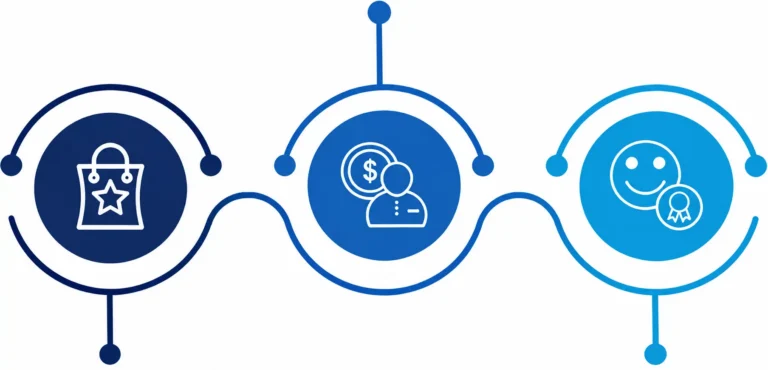
Customer Satisfaction
We serve our customers by being their trusted partner to deliver the best products and services for their needs.
Employee Satisfaction
We invest in our people to build careers around a shared culture of fairness, diversity, empowerment and recognition.
Our mission and targets are aligned closely to the Myanmar Sustainable Development Plan recently published in August 2018, enabling us to create greater value for our stakeholders. Our focus on the highest standards of governance, ethics, sustainability and responsibility also reflect our commitment as one of Myanmar’s leading companies in the industry.
Within the context of our Sustainability Framework, FMI Head Office provides leadership and capital to support the operating companies in their respective areas of service delivery and operational expertise. We monitor and evaluate the sustainability performance of our operating companies in six key areas –Anti-corruption, Legal Compliance, Environment, Employee Training and Development, Diversity and Local Communities – intended to encompass and incorporate the significant Environmental, Social, Governance (ESG) impacts of their operations.
Each of FMI’s major investees is actively enhancing their capacity to serve the public. Beyond mere compliance with minimum service standards, our management focuses on improving their own governance, service excellence, and social responsibility through innovation. Our investees report ESG performance separately.
Stakeholder Mapping
Customers
Serving millions of customers every year, from unborn babies to the elderly and from city dwellers to rural farmers, as a Group, we are committed to be a local brand that caters to various social strata of Myanmar.
Suppliers
Together with our suppliers, we commit ourselves to offer premium and quality-assured products and services through responsible and ethical practices that serve the needs of our customers.
Investors
We ensure that our invesstors’ values are aligned with the entire supply chain – focusing on market opportunities, innovation, sustainability, and corporate social responsibility.

Core Competencies
Our core competencies lie in the four business sectors we operate in. While striving to be a diversified blue-chip conglomerate in Myanmar, we are fully committed to running our businesses efficiently and investing in new start-ups to encourage entrepreneurship and good business practices in the market.
Business Partners
We look for long-term sustainability in every partnership we embark on, both with local and multinational partners. In every business we enter, we exercise due diligence to assess whether our prospective partners’ way of doing business is compatible with our philosophy.
Employees
While striving to achieve a diverse and inclusive workforce that broadens our collective skills and perspectives, we invest in our people to build careers around a shared culture of fairness, diversity, empowerment, and recognition.
Regulators & Financial Institutions
We strive to adhere to the Group’s zero tolerance approach to corruption, bribery and fraud, while committing to comply with rules and regulations in all jurisdictions we operate in.
Communities
To be a responsible corporate citizen is in the DNA of our Group. We are committed to building capacity and giving back to the communities in various aspects, both financially and non-financially in which we operate.
Material ESG Topics' Performance and Targets
The Board of Directors (“the Board”) considers sustainability to be a key element of FMI’s mission to “Build a Better Myanmar for its People”. Together with Management, the Board is committed to managing relevant environmental, social and governance (“ESG”) risks and opportunities across the Group while contributing positively to the environment and society.
FMI’s sustainability efforts are guided by the United Nations Sustainable Development Goals (“SDGs”) and the principles of the United Nations Global Compact (“UNGC”), with a focus on People, Planet and Profit. FMI is committed to responsible business practices, environmental stewardship, employee development, and supporting the communities in which it operates.
FMI’s FY2026 review confirmed that the material topics identified in FY2023 remain relevant to the Group’s sustainability priorities and business operations.
Accordingly, FY2026 Sustainability Section continues to focus on the following material topics:
- Anti-Corruption
- Legal Compliance
- Economic Performance
- Employee Skills, Training, and Development
- Diversity & Equal Opportunity
- Human Rights & Labour Management
- Local Communities
- Customer Satisfaction
- Health & Safety
- Climate Change, Energy & Water Use, Waste & Effluents
| MATERIAL ESG FACTORS | FY2024 TARGETS | FY2024 PERFORMANCE | FY2025 PERFORMANCE | FY2026 PERFORMANCE | FY2027 TARGETS | GRI Standard |
|---|---|---|---|---|---|---|
| Anti-Corruption |
|
|
|
|
| GRI 205 - 2 |
| Legal Compliance |
|
|
|
|
| GRI 419 – 1 GRI 307 – 1 |
| Economic Performance |
|
|
|
|
| GRI 201 – 1 |
| Employee Skills, Training, and Development |
|
|
|
|
| GRI 404 - 1 GRI 404 - 2 |
| Diversity & Equal Opportunity |
|
|
|
|
| GRI 405 – 1 GRI 406 – 1 |
| Human Rights & Labour Management |
| GRI 407 – 1 GRI 408 – 1 |
||||
| Local Communities |
|
|
|
| GRI 413 – 1 | |
| Customer Satisfaction |
|
|
|
|
| |
| Health & Safety |
|
|
|
| GRI 403 – 2 | |
| Climate Change, Energy & Water Use, Waste & Effluents |
| N/A |
|
|
| GRI 302 – 1 GRI 305 – 1 GRI 305 – 4 GRI 302 – 3 GRI 305 – 2 |
Stakeholder Engagement
GRI 2-29
In a fast-changing world, FMI’s close relations with its stakeholders enable it to understand the present and future challenges that its customers face, as well as the trends that are shaping consumers’ demands. FMI has identified eight categories of stakeholders including customers, employees, investors, suppliers, local communities, government, financial institutions and NGOs. Engaging with them-and first and foremost with our employees – forms the basis of our strategy and actions and defines the frame in which we operate.
FMI is committed to nurturing its employees and values partnerships with its customers, local communities, business partners, investors, and other stakeholder groups. FMI has in place various channels and platforms to help it communicate with stakeholders to better understand their needs. Please see the table below for an overview of these platforms and topics raised by key stakeholders.
| STAKEHOLDERS | HOW FMI LISTENS | WHAT THEY HAVE SAID | WHAT FMI IS DOING |
|---|---|---|---|
| Business Partners and Suppliers |
|
|
|
| Communities |
|
|
|
| Customers |
|
|
|
| Investors |
|
|
|
| Financial Institutions, including IFC and ADB |
|
|
|
| NGOs (such as WWF) |
|
|
|
| Regulators (YSX, SECM, Central Bank) |
|
|
|
Our People
Workforce Movement
GRI 401-1, GRI 2-7
FMI is setting the benchmark with its strong commitment to be a responsible employer. The Group invests in its people to build careers around a shared culture of fairness, diversity, empowerment, and recognition. Successful employee engagement is a necessary requirement for the Group’s ambitious growth plans and progress towards achieving its Mission.
Employee Profile
Total Number and Percentage of Employees by Employment, by Gender
| Male | Female | Total Number of Employees | |||
|---|---|---|---|---|---|
| Head Count | Percentage | Head Count | Percentage | ||
| FY2025 | 2,537 | 43% | 3,358 | 57% | 5,895 |
| FY2026 | 2,560 | 43% | 3,442 | 57% | 6,002 |
Total Number and Percentage of Employees by Employment, by Age Group
| Employees by Age | Male | Female | ||
|---|---|---|---|---|
| Head Count | Percentage | Head Count | Percentage | |
| Less than 20 | 49 | 1% | 59 | 1% |
| 20 – 29 | 2248 | 38% | 2279 | 38% |
| 30 – 39 | 2200 | 37% | 2187 | 36% |
| 40 – 49 | 840 | 14% | 860 | 14% |
| 50 – 65 | 538 | 9% | 595 | 10% |
| 66 - 75 | 19 | 0% | 21 | 0.3% |
| >75 | 1 | 0% | 1 | 0.0% |
| Employees’ Engagement* | Turnover** | Absenteeism Rate** | ||||
|---|---|---|---|---|---|---|
| Head Count | Percentage | Head Count | Percentage | Head Count | Percentage | |
| FY2025 | 4,896 | 83% | 76 | 1% | 37 | 0.6% |
| FY2026 | 5,039 | 84% | 300 | 5% | 56 | 1% |
Note:
* The company measures how motivated, committed and satisfied employees feel toward their work.
** The rate at which employees leave the company during the reporting period.
*** The rate at which employees are absent from work.
Employee Skills Training and Development
GRI 404-1, GRI 404-2
FMI is committed to building employee capabilities through structured training and development initiatives that support professional growth and organisational effectiveness. In line with this commitment, the Group provides equal access to training and professional development opportunities for both male and female employees, promoting equal opportunity and inclusive employee development across the Group. Established programmes, including the Yoma Leadership Forum, focus on developing middle management and enhancing leadership capabilities across the Group. To support continuous learning, the Group leverages its e-Campus learning platform, which provides accessible and flexible training through a combination of digital and classroom-based formats. Additional programmes, such as Yoma Emerging Stars (“YES”) (Batch 1-3) leadership development initiatives for emerging talent, further strengthen capabilities at the executive and supervisory levels.
Training effectiveness is evaluated through performance indicators and stakeholder feedback to support continuous improvement. The Group aims for 10 training hours per employee annually, delivered through a combination of in-person and digital learning formats.
Collectively, these initiatives contribute to employee well-being, capability development and the advancement of local talent, supporting the Group’s sustainability objectives and broader business transformation strategy.
Our Performance
| Average Training Hours | |
|---|---|
| FY2025 | 9 |
| FY2026 | 12 |
| Head Count | Percentage | |
|---|---|---|
| FY2025 | 2812 | 48% |
| FY2026 | 2722 | 45% |
Total Number and Percentage of Employee Careers’ development Programmes and Performance Appraisal Processes
| Performance Appraisals | Careers’ Development | |||
|---|---|---|---|---|
| Head Count | Percentage | Head Count | Percentage | |
| FY2025 | 5,895 | 100% | 1,162 | 19.7% |
| FY2026 | 6,002 | 100% | 1,257 | 21% |
Health & Safety
GRI 403 – 2
Providing a healthy and safe work environment for employees, customers, business partners and visitors is one of FMI’s top priorities. Every employee has a personal responsibility to support this commitment. Employees are obligated to carry out their work in a safe manner, without causing harm to themselves or others and to report any potentially unsafe or unhealthy situations immediately. They must observe and follow all safety and environmental regulations laid down in the operations instructions, including putting on the necessary safety equipment, where applicable.
Any health and safety accidents as well as occupational health & safety inspections are registered according to the type of case and incident. These are consolidated into a monthly report and reviewed by Risk Management and Assurance, as part of the overall risk assessment process.
The Group recorded no work-related fatalities in either FY2025 or FY2026. During these periods, 16 employees experienced work-related injuries in FY2025, compared with 20 employees in FY2026.
| Head Count | Percentage | |
|---|---|---|
| FY2025 | 1,618 | 27% |
| FY2026 | 1,766 | 29% |
Note : Employee data presented in the tables above includes from FMI head office, Yoma Bank, Pun Hlaing Hospitals, Yoma Land and Memories Group.
Our Planet
Balancing the need for rapid development with good stewardship of Myanmar’s resources, FMI is dedicated to safeguarding, and where possible, improving Myanmar’s environment – for the people of Myanmar, and to ensure the sustainability of its own business. The Group is mindful of its environmental impact and aware of the complexities involved in topics like climate change. FMI considers its net impact on the environment to be positive, but many challenges remain in Myanmar.
Energy Efficiency & Climate Change
Energy Consumption
| FY2025 | FY2026 | |
|---|---|---|
| Energy consumption: renewable fuel sources in watt-hours | 4,480,000 | 4,529,000 |
| Energy consumption: non-renewable fuel sources in watt-hours | 969,352,000 | 1,278,403,000 |
| Energy consumption: electricity in watt-hours | 8,876,262,006 | 8,514,091,875 |
Green House Gas (GHG) Emissions
| FY2025 | FY2026 | |
|---|---|---|
| Total Scope 1 GHG emissions in metric tonnes of CO2 equivalent | 4,982 | 4,642 |
| Total Scope 2 GHG emissions in metric tonnes of CO2 equivalent | 4,113 | 4,003 |
| Total Scope 3 GHG emissions in metric tonnes of CO2 equivalent | 63 | 49 |
| Total Scope 1 GHG emissions reduction in metric tonnes of CO2 equivalent | N/A | 592 |
| Total Scope 2 GHG emissions reduction in metric tonnes of CO2 equivalent | N/A | 296 |
| Total Scope 3 GHG emissions reduction in metric tonnes of CO2 equivalent | N/A | 14 |
| GHG intensity in metric tonnes CO2 equivalent per unit of organisation-specific metrics | 26.91 | 15.30 |
Waste
GRI 306-2
FMI has put in place various policies to minimize resource consumption and manage waste effectively. We are committed to managing our waste properly, implementing the concept of a circular economy – reducing, reusing, recycling, and replacing throughout our operations.
| FY2025 | FY2026 | |
|---|---|---|
| Total waste generated in metric tonnes | 2,359.34 | 2,262.36 |
| Total waste diverted from disposal in metric tonnes | N/A | 0.03 |
| Total waste directed to disposal in metric tonnes | 2,359.34 | 2,262.33 |
| Hazardous waste generated in metric tonnes | 914 | 584 |
| Hazardous waste directed to disposal in metric tonnes | 914 | 584 |
| Non-hazardous waste generated in metric tonnes | 1,445 | 1,678 |
| Non-hazardous waste directed to disposal in metric tonnes | 1,445 | 1,678 |
Water and Effluents
GRI 303-3
FMI acknowledges its responsibility to preserve the quality of the land, water and air and actively work to protect and converse the land it owns and operates on. We used mainly the source of treated ground water.
| FY2025 | FY2026 | |
|---|---|---|
| Total water withdrawn from all areas in litres | 123,134,000 | 119,916,000 |
| Total water discharge in litres | 110,820,600 | 107,924,400 |
| Total water consumption in litres | 123,134,000 | 119,916,000 |
Note: The data presented in the tables above includes from FMI head office, Yoma Bank and Pun Hlaing Hospitals.